Best AI Visibility Tools in 2026: 10 Options Compared
Compare the best AI visibility tools by coverage, pricing, and use case, with selection criteria and honest limitations for 2026.
You ask ChatGPT, Perplexity, and Gemini for the best providers in your category. Your competitor shows up in every answer, with a tidy summary and a link to a review page. Your brand does not appear once, even though your main product page ranks on page one in Google.
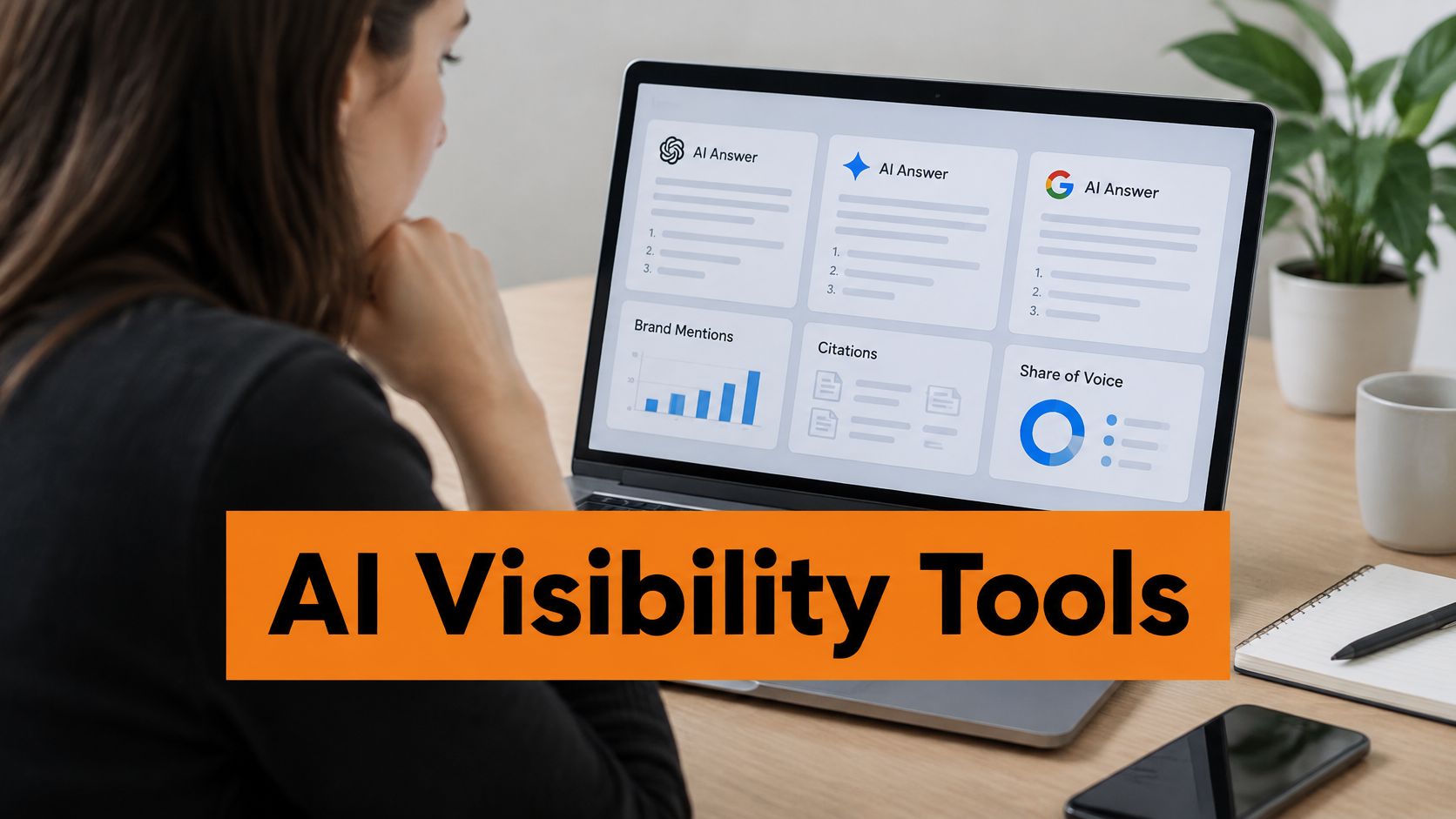
That gap is why teams now buy separate measurement. A rank tracker tells you where a URL sits in a list of links. It does not tell you whether an AI answer mentions you, cites you as evidence, describes you accurately, or recommends a rival instead. The best AI visibility tools track those four things across repeated prompts, so you can see patterns instead of screenshots.
The need is not theoretical. Semrush's AI Overviews study of more than 10 million keywords found AI Overviews appeared for 6.49% of queries in January 2025, climbed to 24.61% in July, and then declined to 15.69% in November. Commercial and transactional queries moved too, which means buyers now meet AI answers close to a purchase decision, not only during early research.
What to look for before you compare prices
Separate two jobs first. Research tools explore a market, topic, or set of competitors from existing data. Prompt trackers run your chosen questions repeatedly and report change over time. Both are useful, but they are not interchangeable.
- Mention rate: How often your brand is named for a defined prompt set.
- Citation rate: How often your pages, or trusted third party pages about you, are used as sources.
- Share of voice: Your presence compared with named competitors.
- Sentiment and accuracy: Whether the description is positive, neutral, negative, or incorrect.
I judge the tools below on what the entry price buys in prompts, engines, and history, and on whether a small team will still use the output after month one. Feature count alone is a poor guide.
Table of Contents
- What to look for before you compare prices
- 1. Outrank
- 2. OtterlyAI
- 3. Peec AI
- 4. Ahrefs Brand Radar
- 5. Semrush AI Visibility Toolkit
- 6. Scrunch
- 7. Profound
- 8. AthenaHQ
- 9. Writesonic
- 10. SE Visible by SE Ranking
- 11. HubSpot AEO
- How the Leading AI Visibility Tools Compare on Entry Price, Prompt Limits, and Best Fit
- Choosing an AI Visibility Tool Your Team Will Actually Use
1. Outrank
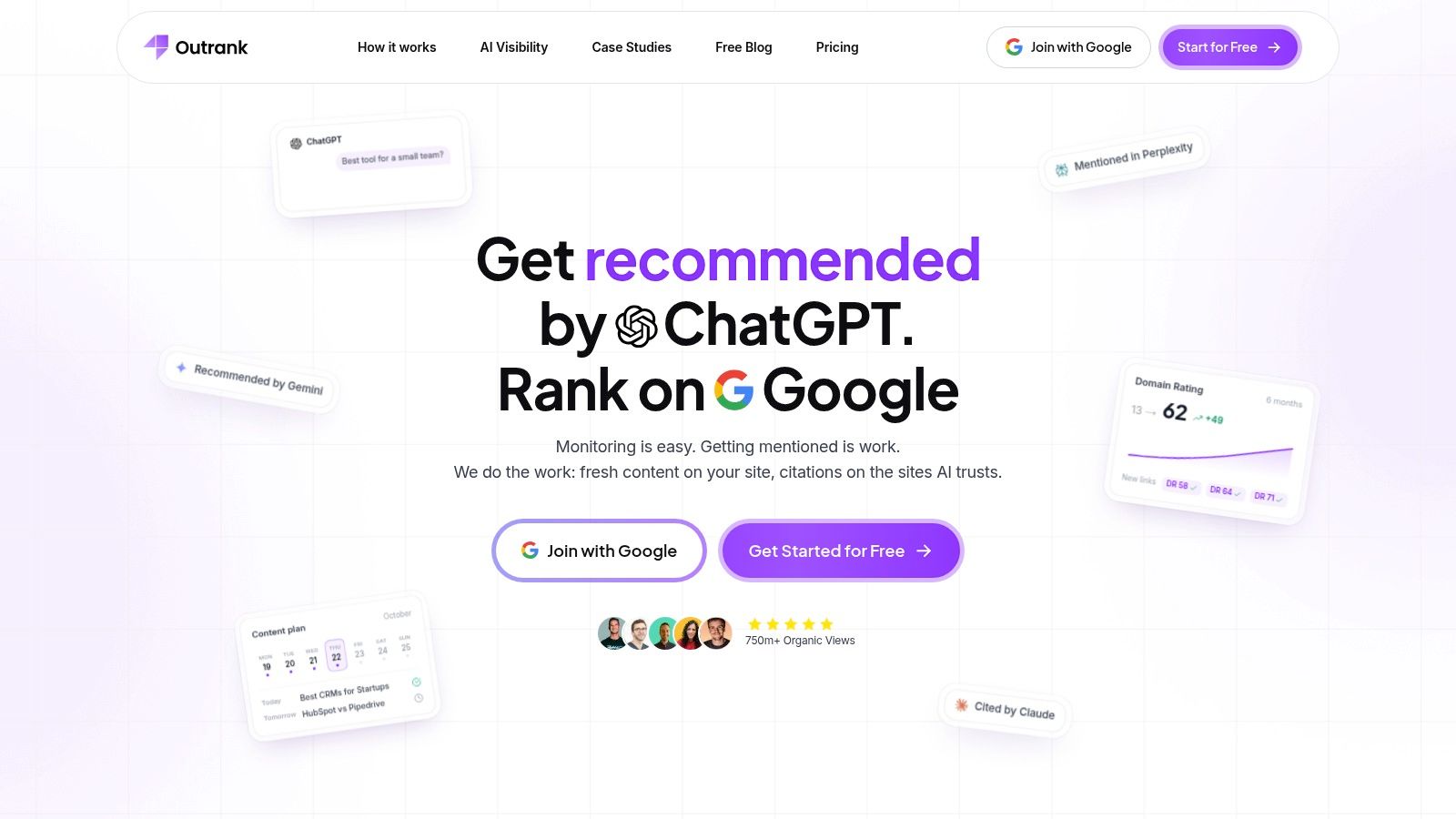
Outrank sits in a different position from a pure prompt tracker. It is built around producing and publishing SEO content, then using that content to improve the chances that AI systems find, understand, and cite your brand. If your problem is that you have visibility data but no capacity to publish the pages that would fix it, that distinction matters.
The platform generates SEO optimized articles and custom on brand images, supports keyword research and content customization, and can produce long form articles of up to 3,000 words. Publishing is handled through direct uploads to WordPress, Webflow, and Notion, which removes the copy, format, and upload steps that slow small teams down. You can explore how it frames AI citations as part of that publishing workflow.
Where it fits in an AI visibility stack
Say a tracker shows competitors are cited for comparison and how to prompts while your site has only short product pages. A monitoring tool stops at the diagnosis. Outrank is aimed at the next step, building the detailed, quotable content those answers tend to pull from, in your brand voice, without hiring a full content team.
- Content generation: Long form articles shaped around keywords and brand voice.
- Custom visuals: On brand images created inside the same workflow.
- Publishing integrations: Direct paths to WordPress, Webflow, and Notion, plus API integrations.
- Collaboration: Multi user access, unlimited AI rewrites, and 24/7 support through a dedicated channel.
The trade off is clear. If you only want a dashboard that replays 100 prompts every morning across five engines, a dedicated tracker below will give you cleaner measurement. Outrank earns its place when publishing volume and consistency are the bottleneck, and you want measurement to feed production rather than sit in a separate report nobody acts on. For ambitious founders and lean teams, I would pair it with a lightweight tracker for verification, then let Outrank handle the content engine.
2. OtterlyAI
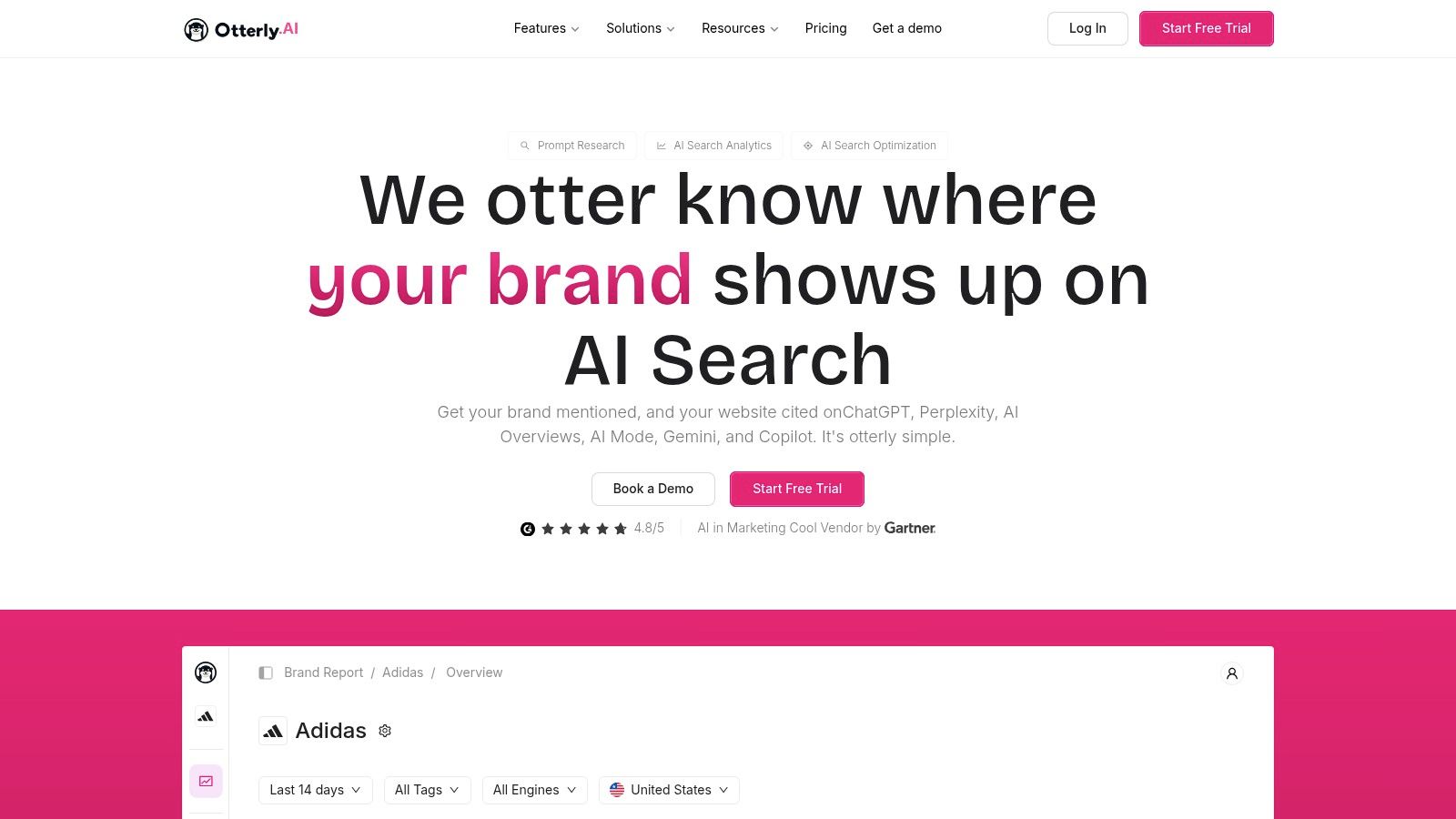
A cheap entry plan answers one question: does this brand show up at all? OtterlyAI is built for that first check, with ongoing prompt and brand visibility tracking across AI search products, citation and source reporting, sentiment, and optimization recommendations. This is a tracker, not a one-off research tool. The value comes from repeating the same prompt set and watching movement.
Pricing is published, so you can estimate cost per tracked prompt before a sales call. The listed Lite plan is $29 per month for 15 prompts, with higher plans at $189 and $489 per month, according to OtterlyAI's website. At the entry price, you are buying a narrow prompt set, so confirm which engines and features each tier includes before you buy.
The honest limits
Fifteen prompts is a smoke test, not a measurement program. You'll learn whether you appear for your most obvious category questions, but you won't get stable trend data by topic, funnel stage, or location. Volatility is the reason. AirOps research analyzing 800 queries and more than 45,000 citations found approximately 57% of brands that disappeared from one response later resurfaced in another run.
A cheap plan that runs on a recurring schedule beats an expensive audit you check once a quarter, as long as you accept a narrow prompt set.
Pros: Clear entry pricing, purpose-built for AI visibility, and recurring prompt checks. Cons: Low prompt limits at entry, features that vary by tier, and no complete traditional SEO or content production suite. I recommend it for a solo founder validating demand for this channel. Plan to upgrade or migrate once prompt volume becomes the constraint.
3. Peec AI
Peec AI is a focused AI search analytics platform for brands and agencies that want recurring reports rather than ad hoc checks. It centers on daily prompt tracking, brand performance reporting, and competitor visibility analysis across selected AI models, with separate plans available for agencies.
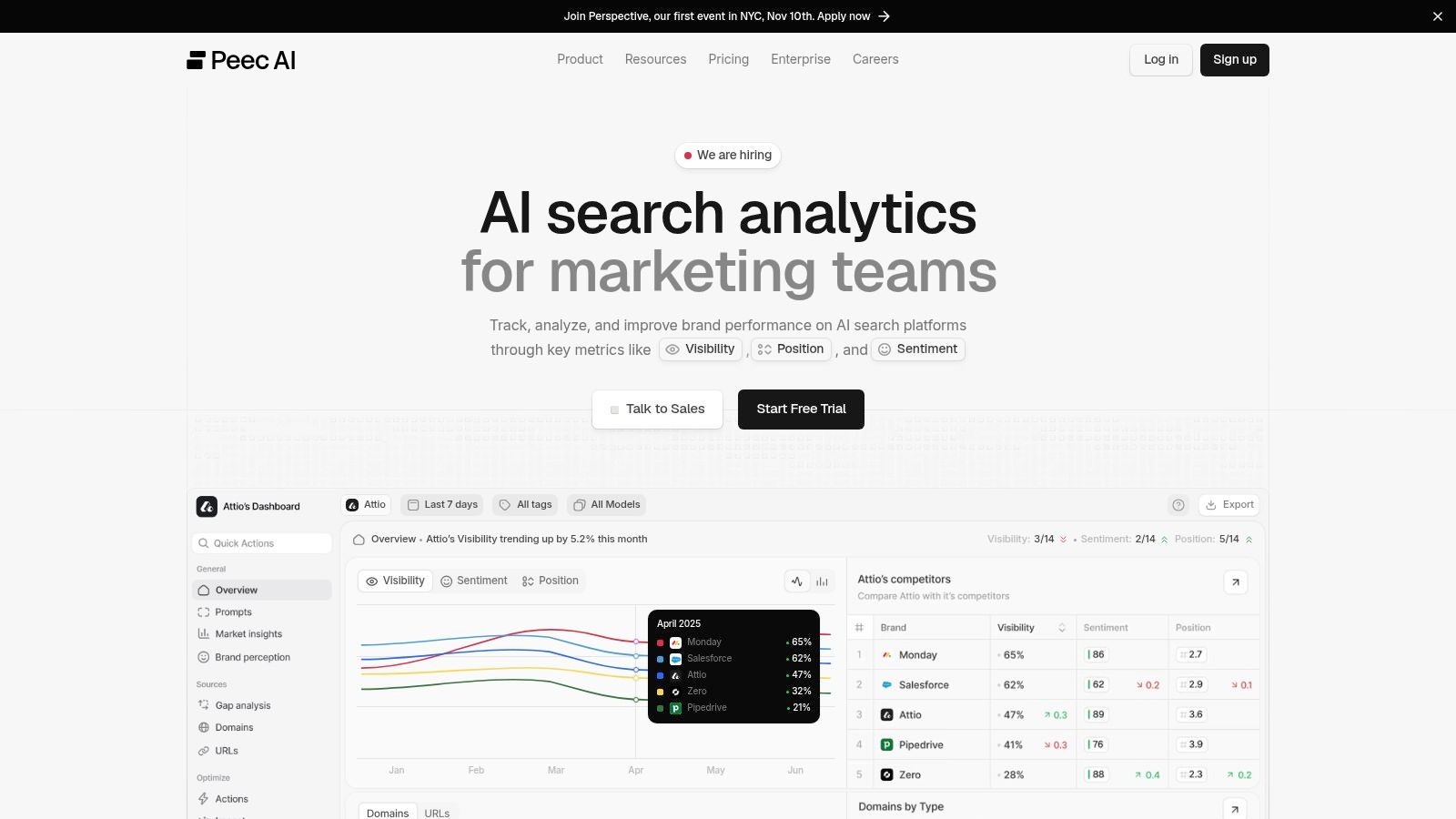
The plan structure is its practical strength. The listed Starter, Pro, and Advanced plans include 50, 150, and 350 prompts respectively, while Enterprise pricing is custom. That lets you estimate cost per tracked prompt before a sales call, which is rarer than it should be in this category.
Who gets value fastest
A B2B SaaS team tracking 40 category prompts and three competitors can fit inside the entry tier and still have headroom. An agency juggling several clients, locations, and reporting formats will move up quickly, because multiple projects and richer reporting sit in higher tiers. Unlimited users on the listed brand plans help here, since you do not pay a seat tax for sharing results with clients or leadership.
- Strength: Clean, focused interface if you do not need a full SEO suite.
- Strength: Competitor reporting that supports a weekly share of voice review.
- Weakness: Entry limits on prompts and models narrow your view.
- Weakness: It is primarily analytics, not a content or SEO workflow.
Peec suits teams that already know which prompts matter and want disciplined tracking. It won't write the fix for you, and broader coverage may require a higher tier or custom pricing. Treat it as a measurement layer with a clear upgrade path, not an all in one growth platform.
4. Ahrefs Brand Radar
Brand Radar is Ahrefs' AI visibility research tool, built for SEO practitioners who want to investigate how brands appear in AI answers alongside wider search and web data. That research framing is important. It helps you explore a market, compare brands, and find topics, which is different from monitoring a fixed panel of prompts you chose yourself.
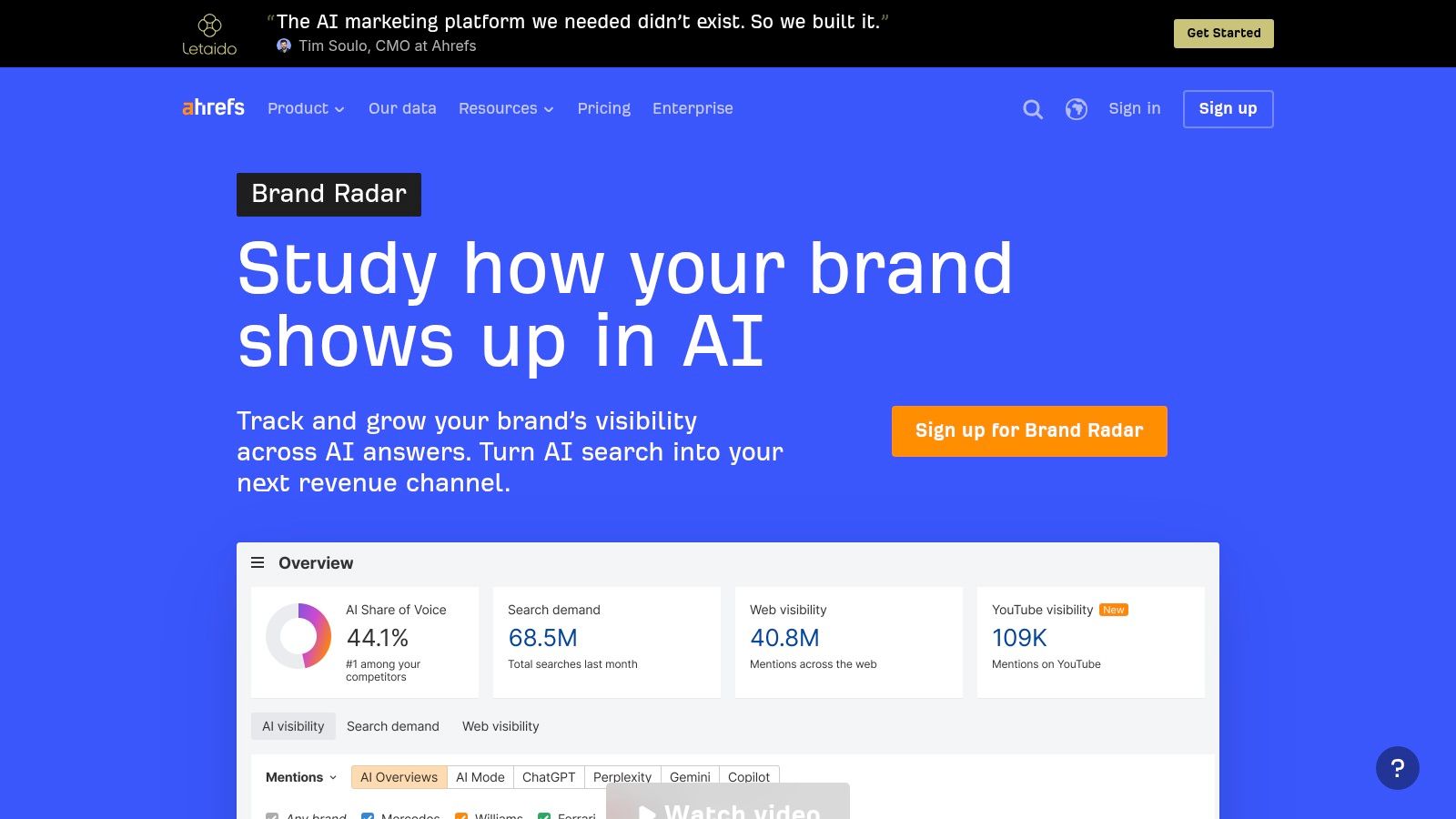
Coverage, according to Ahrefs, spans platforms including ChatGPT, Gemini, Perplexity, Copilot, Grok, Claude, and Google AI Overviews. Metrics include AI mentions and citations, plus share of voice and impression style reporting. Because it connects to Ahrefs' broader SEO and web data, you can move from an AI mention to the linking and content context behind it. That pairs naturally with topic research, and Quuu's guide to finding trending topics with Ahrefs shows the adjacent workflow for spotting demand before you brief content.
Why existing Ahrefs users should look first
Brand mentions matter beyond AI dashboards. Ahrefs' analysis of 75,000 brands found branded web mentions had the strongest measured correlation with AI Overview visibility, with a Spearman correlation of 0.664. A tool that sees both web mentions and AI presence helps you test that relationship on your own footprint.
The downsides follow from its strengths. Total cost depends on your Ahrefs subscription and data access, and it feels more SEO oriented than a lightweight standalone monitor. If your team lives in Ahrefs, start here for research. If you need your exact 80 prompts checked daily, confirm that workflow before assuming research data covers it.
5. Semrush AI Visibility Toolkit
For a team already paying for Semrush, the Semrush AI Visibility Toolkit is the consolidation play. It tracks brand presence and competitors in AI generated results while keeping SEO, competitive research, and content workflows in one familiar platform. That reduces tool switching and makes reporting easier for a marketing lead who already builds Semrush dashboards.
The appeal is context. You can compare an AI visibility gap with keyword positions, content performance, and competitor activity without exporting data between products. Teams evaluating adjacent tooling may also find Quuu's comparison of top AI content curation platforms useful when deciding which parts of the content stack to consolidate and which to keep specialist.
When consolidation becomes overhead
A broad platform has a learning curve. If your only job is to run 30 prompts each morning and share mention rates with a founder, Semrush may give you more interface, more settings, and more plan complexity than you need. Pricing and feature availability also depend on your plan or toolkit configuration, so confirm whether AI visibility is included, limited, or sold as an add on for your account.
- Best case: One contract and one reporting habit for SEO plus AI search.
- Risk: You pay for breadth you never open.
- Check first: Exact engine coverage, prompt limits, and history on your tier.
I would choose Semrush when your SEO team will own AI visibility day to day. I would skip it when a small brand team wants the fastest possible path from signup to first prompt report. Familiarity is a real advantage, but only if your team already has it.
6. Scrunch
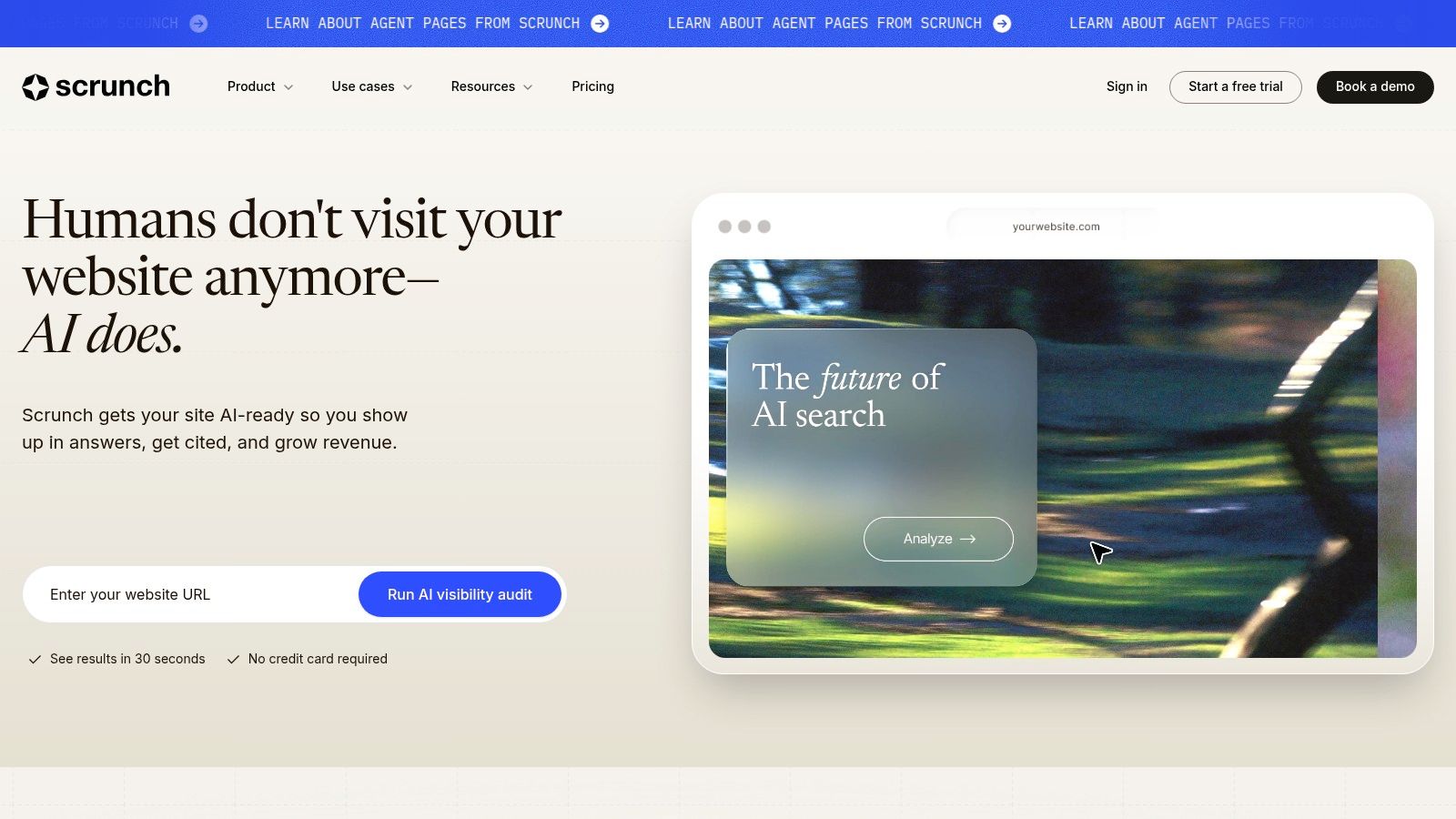
Diagnosis is the pitch. Scrunch monitors brand mentions and citations across AI platforms, then adds diagnostic and optimization capabilities meant to explain why visibility is weak and what to improve. That scope points at mid-market and enterprise teams, including agencies managing multiple brands. A dashboard tells you mention rate. Scrunch tries to show which sources and pages are driving the mention, which matters when an answer contains an outdated price or a wrong product claim.
Scrunch's paid plans start in the low hundreds of dollars per month, with custom enterprise pricing and a trial period; check the site for current terms. The entry point alone signals the buyer. This is not a casual add-on for a solo operator. Packaging in this category changes quickly, so confirm seats, engines, prompt volume, and history on the plan you are quoted.
Pay for diagnosis only if you will act
Say your brand is mentioned often but described with outdated pricing. A basic tracker flags sentiment. A diagnostic platform should help you find which sources the models repeat, which pages need correction, and whether the error persists across engines. That work justifies a higher price only when someone owns the fixes across content, PR, and product marketing.
Practical rule: Do not buy optimization features until you have named the person who will ship one visibility fix every week.
Scrunch is built for diagnosis and optimization, not content production, so the writing and publishing still happens in your CMS or content workflow. It fits organizations building a structured AI search program with budget and follow-through. Smaller teams will get better value from a cheaper tracker and a separate content workflow.
7. Profound
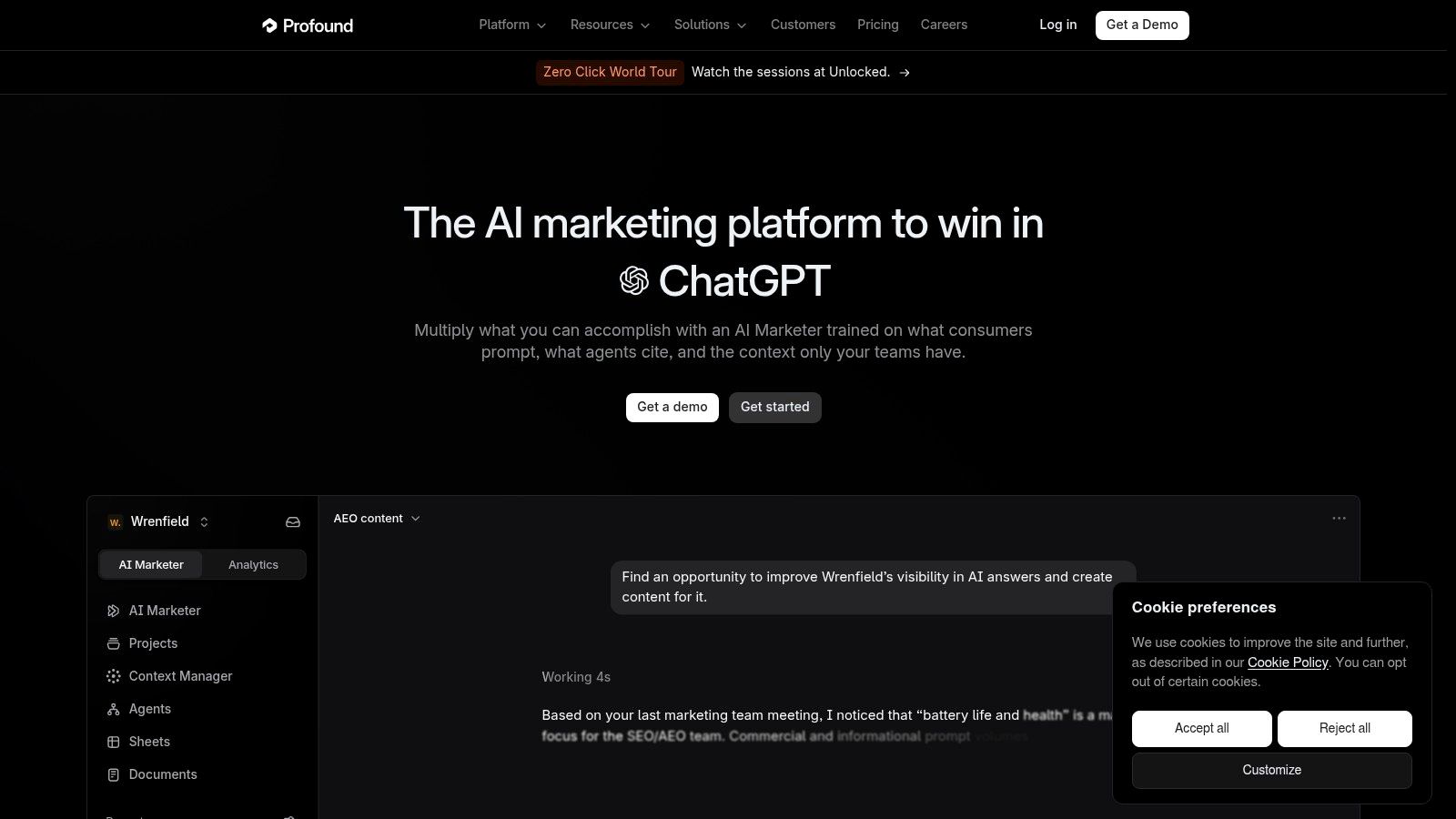
Profound is a specialist platform for larger marketing, SEO, and communications teams that need detailed insight into how brands appear in AI search. It monitors brand presence in AI generated answers, provides visibility and citation analysis, and surfaces opportunities to improve representation. The positioning is enterprise first rather than self serve first.
Depth matters here because AI answers are inconsistent. The Prime AI Visibility Benchmark tested 50 buyer questions covering 25 brands across five categories, sent each question three times to seven model configurations, and scored 1,050 usable answers. Citation accuracy and factual error rates varied widely by configuration, which is exactly why enterprise buyers ask for raw prompts, answer captures, and citation URLs instead of a single proprietary score.
Questions to ask in the demo
Public pricing details are not consistently available, so the demo carries more weight than usual. Ask for included models, prompt volumes, seats, history retention, exports, and how factual errors are flagged. Ask to see the underlying answers behind a score change. If a vendor cannot show you the evidence, you cannot brief a fix.
- Strength: Specialist focus on AI search rather than a general SEO toolkit.
- Strength: Built for deeper analysis and complex organizations.
- Weakness: Pricing and access are less straightforward than self serve rivals.
- Weakness: Likely more platform than a small team needs for a few prompts.
Profound makes sense when AI visibility has executive attention and a dedicated owner. It is a harder sell for a lean team still proving the channel exists.
8. AthenaHQ
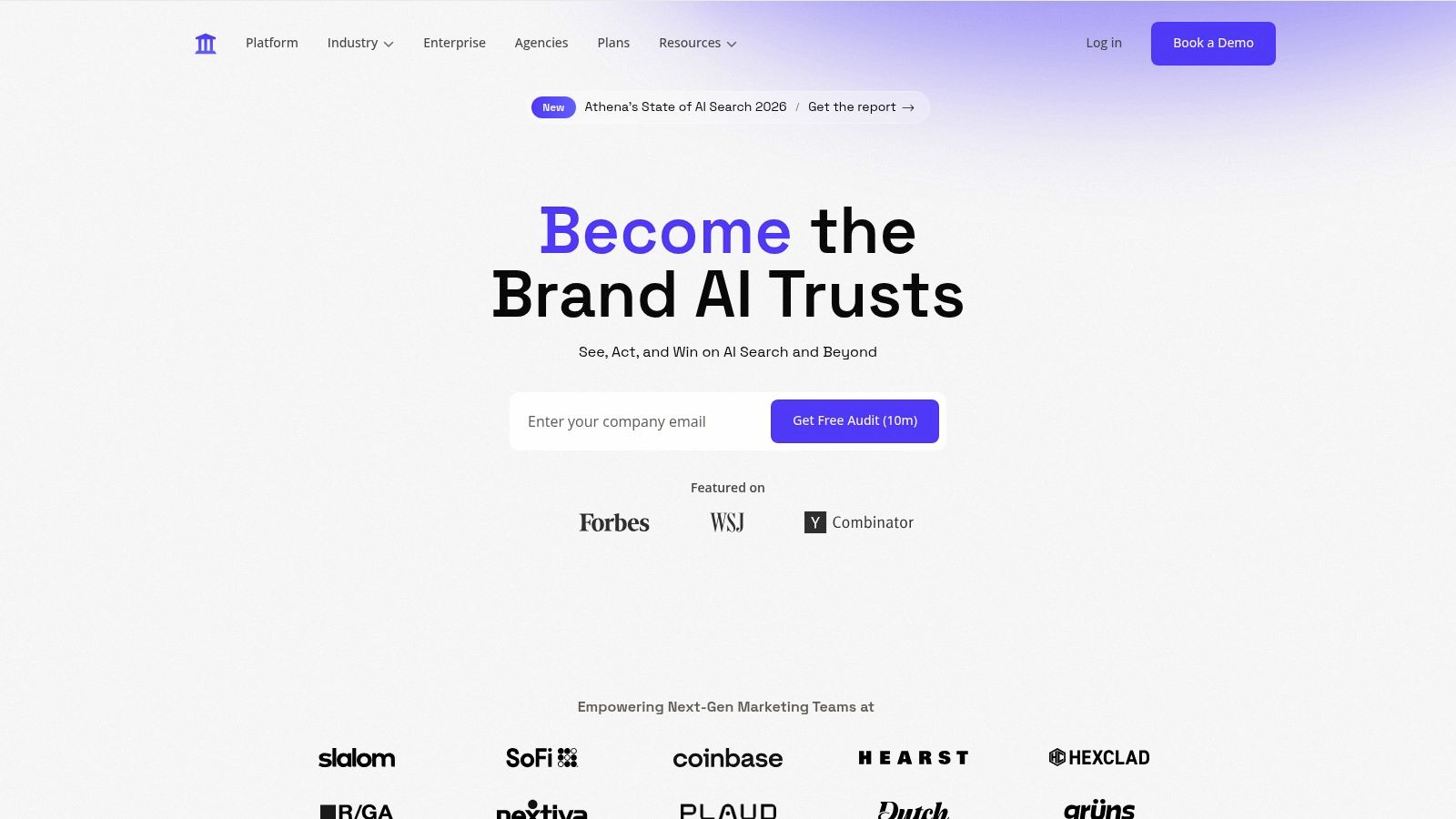
A mid-market team runs ten buyer prompts and finds a competitor cited in five. The report is clear. The harder question is what to change first. AthenaHQ is built for that second step: it tracks brand visibility and competitor presence across AI search, then pairs the findings with analysis and recommended actions. The pitch is guidance inside the same product, which appeals to teams that do not want reporting alone.
Check AthenaHQ for current plan details. The lineup includes a free entry plan, paid tiers, and custom Enterprise pricing. Higher tiers are less transparent than self-serve rivals, so confirm model coverage, prompt limits, seats, and history retention before budgeting. A free entry point is useful for evaluation, but it can hide the tier you need for weekly tracking. Test with your real prompt set, not a demo category.
How to evaluate the recommendations
Recommendations vary in quality across this category. During a trial, pick ten prompts where a competitor wins. Check whether AthenaHQ identifies the cited sources, explains the likely gap in plain language, and suggests a specific page, third-party placement, or correction your team could ship that week. Generic advice to create more content is not an action layer.
The broader AI context explains why vendors are adding guidance. McKinsey's 2025 global survey reported 78% of respondents said their organizations used AI in at least one business function, up from 72% in early 2024 and 55% a year earlier. More internal AI use means more stakeholders asking how the brand is represented.
The tradeoff is track record and cost at scale. Advanced use may require a substantial paid plan, and a newer specialist is harder to compare with established SEO suites on long-term reliability. Choose it if guided next steps will be used by your team each week.
9. Writesonic
Writesonic takes the bundled route, combining AI visibility and GEO features with content creation and SEO capabilities. It tracks brand presence and prompts across AI search platforms, pairs that with site audits and writing tools, and adds features such as sentiment analysis and expanded tracking on higher plans. Enterprise plans cover custom needs.
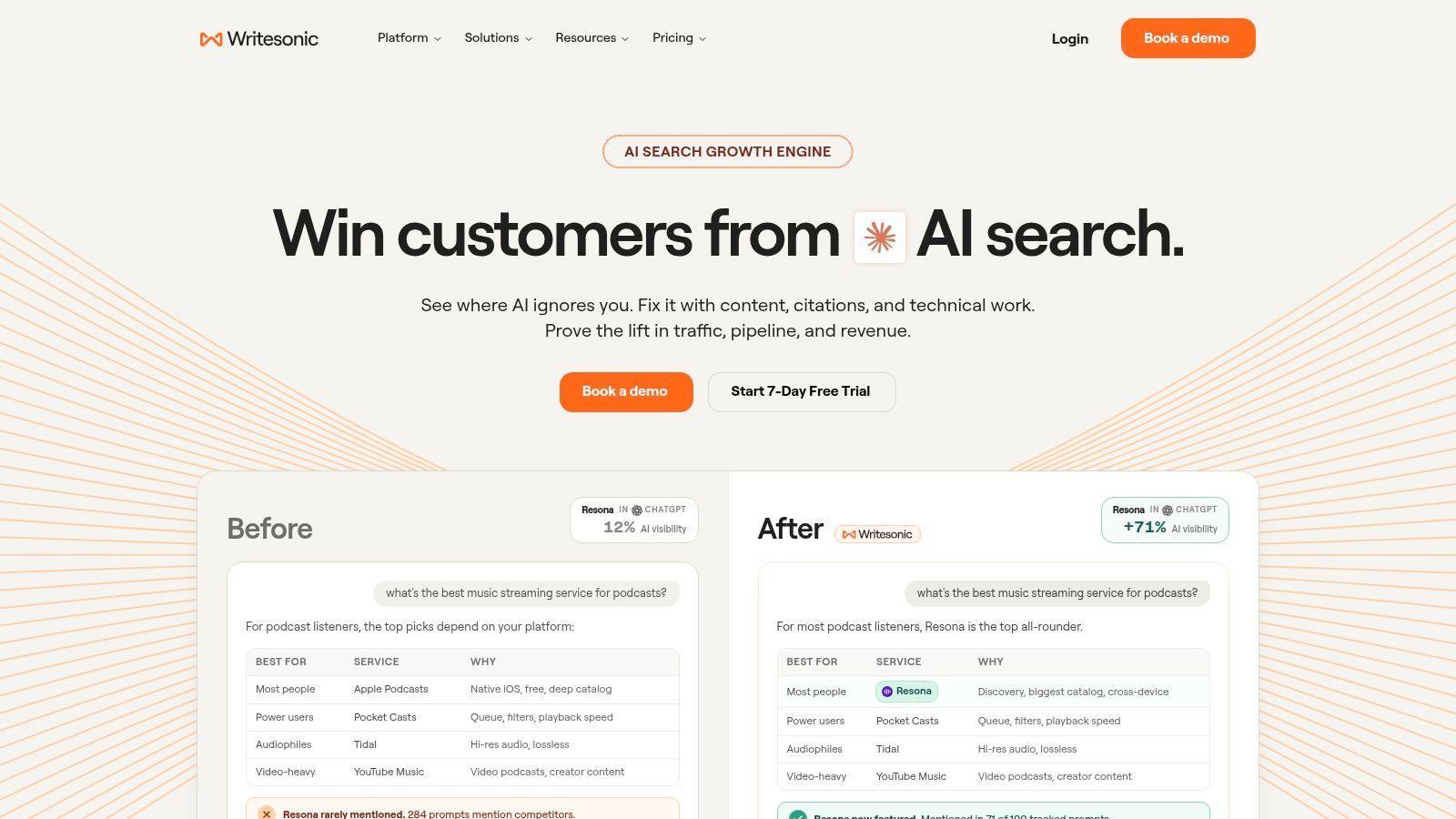
Listed pricing puts Basic at $249 per month, or $199 per month billed annually, and Growth at $499 per month, or $399 per month billed annually. Meaningful GEO functionality and platform coverage vary by plan, so map the engines and limits you need against the tier before comparing headline prices with a dedicated tracker. Teams linking visibility findings to content planning may also benefit from Quuu's guide to AI powered content performance prediction when prioritizing which topics deserve production time.
The bundle test
Bundles win when one team owns both jobs. If the same marketer checks prompt gaps on Monday and drafts the comparison page on Tuesday, fewer handoffs help. If different teams own measurement and writing, a bundle can leave both sides compromising.
- Strength: Moves from identifying an opportunity to creating content in one product.
- Strength: Broader than a tracker for teams building a GEO workflow.
- Weakness: Unnecessary breadth if monitoring is your only need.
- Weakness: Useful GEO depth can require a higher priced plan.
I would shortlist Writesonic for content led teams that want production attached to visibility data. I would not buy it solely as a prompt tracker without checking whether a cheaper specialist reports the same engines more clearly.
10. SE Visible by SE Ranking
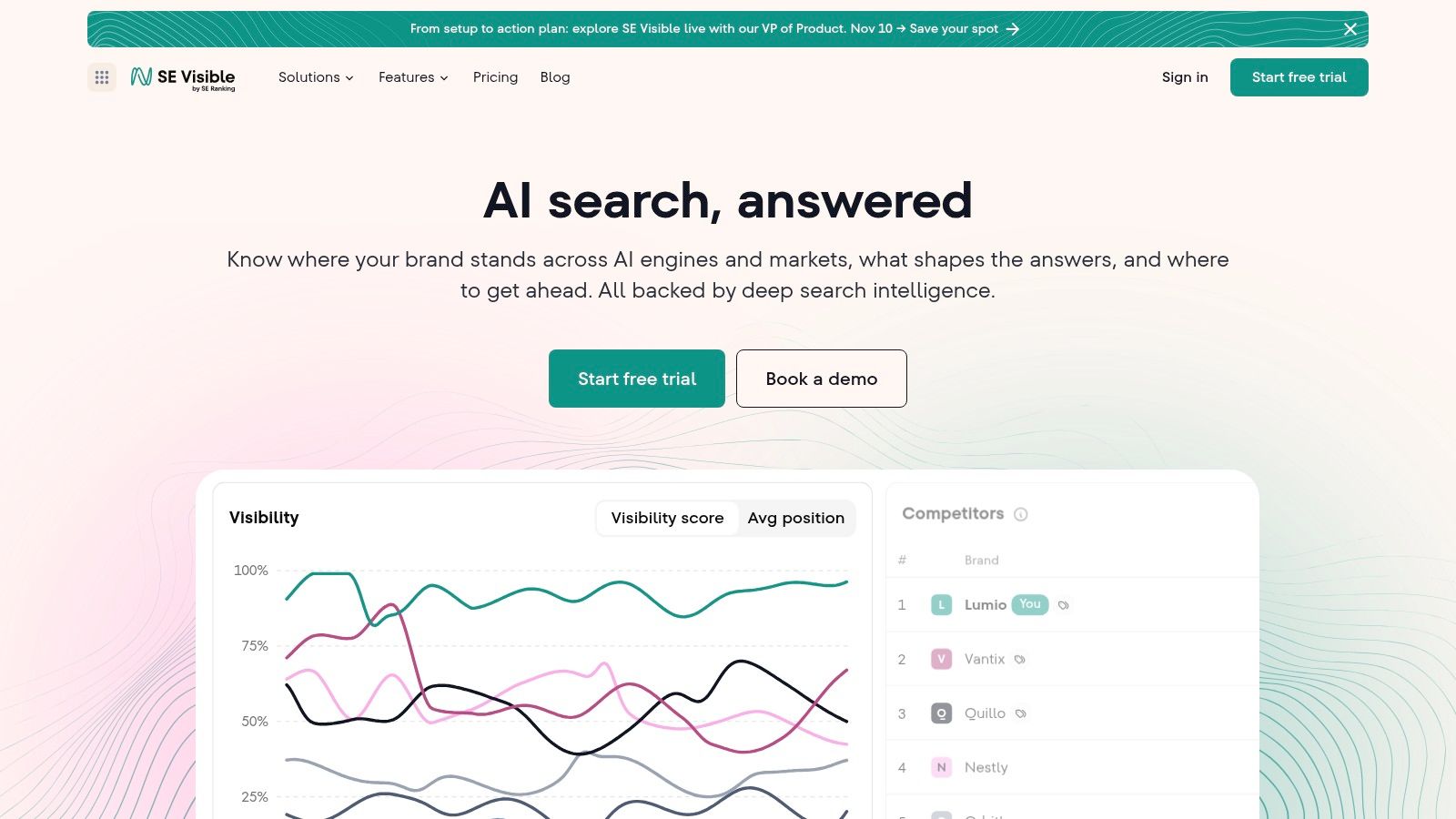
SE Visible by SE Ranking is a dedicated AI visibility product for tracking how brands appear in AI generated answers. It covers brand and competitor visibility, sentiment, and citations, with daily prompt tracking on listed plans. Paid plans add API and MCP access, while higher tiers include multiple projects and locations.
Access starts small. New subscriptions include a small SE Visible Start package, and a 10 day trial is available. Larger prompt and project limits require paid plans or add ons, with enterprise pricing custom. Unlimited user seats are listed across its plans, which helps agencies share access without rationing logins.
Agency fit and naming friction
Agencies should model limits carefully. Prompts, projects, and locations multiply fast when each client wants category, comparison, and branded prompts across two countries. A plan that looks roomy for one brand can feel tight across ten clients. Run the trial with two representative clients rather than one flagship account.
Seat pricing rarely kills an agency rollout. Prompt and project caps do.
The main confusion is product boundaries. Buyers need to separate SE Visible from SE Ranking's wider SEO platform and confirm what they are purchasing. That is manageable with a careful trial, but it adds diligence work. For agencies and SEO teams that want a purpose built tracker with daily checks, SE Visible is a credible shortlist option, provided the limit math works at your client volume.
11. HubSpot AEO
HubSpot AEO puts AI search monitoring inside HubSpot's marketing platform. It tracks brand mentions and citations in AI answers, runs competitor comparisons, and attaches recommendations to the campaigns and content your team already manages there.
HubSpot's own pricing page is the only reliable place to confirm what AEO costs, which AI platforms it covers, and how many prompts that entry price buys. Get those three answers before you budget. They decide whether the tool supports a weekly reporting rhythm or just occasional spot checks.
Best inside the ecosystem
A team already running campaigns, content, and reporting in HubSpot gets genuine value from keeping the work in one place. A marketing manager can pull AI citation data next to campaign results, then hand a recommendation straight to the content owner without a second login or a new vendor relationship. That handoff is where most of the time savings sit.
The case weakens outside that stack. If HubSpot isn't your system of record, the integration story buys you nothing, and a dedicated tracker usually offers deeper prompt-level control and more flexible exports. History retention deserves a direct question too. A short lookback window is fine for a launch check and useless for tracking a category across two quarters.
HubSpot AEO suits committed HubSpot customers who want monitoring and recommendations where their marketing work already lives. For everyone else, compare it against dedicated trackers on engine coverage, prompt limits, and history depth, and let brand familiarity settle nothing.
How the Leading AI Visibility Tools Compare on Entry Price, Prompt Limits, and Best Fit
Entry pricing splits these tools into two groups. Research tools sit on top of an SEO suite your team may already pay for, while ongoing prompt trackers charge per prompt panel month after month. The typical published figures sit below.
| Item | Typical Starting Price | Entry Prompt Limit | Best Fit |
|---|---|---|---|
| Outrank | $99/month | No separate prompt cap; monitoring runs alongside content plans | AI-powered SEO content creation and publishing |
| OtterlyAI | $29/month | 15 prompts | Teams seeking focused AI visibility monitoring |
| Peec AI | $90 to $120/month | 50 prompts | Brands and agencies needing recurring AI visibility reports |
| Ahrefs Brand Radar | Included with higher Ahrefs plans, from $129/month | Prompt sets defined per report | Ahrefs users researching brand and topic visibility |
| Semrush AI Visibility Toolkit | From about $99/month as an add-on | No fixed prompt cap; monitoring sits inside the toolkit | Teams combining AI visibility reporting with Semrush SEO workflows |
| Scrunch | $250/month | No published prompt cap | Mid-market and enterprise teams diagnosing AI visibility |
| Profound | Quote-based, priced per workspace | Prompt volume set in the contract | Larger teams needing detailed AI search analysis |
| AthenaHQ | Free tier; paid tiers from about $50/month | Free tier covers a small prompt set | Marketing teams seeking visibility analysis and recommendations |
| Writesonic | $249/month, or $199/month billed annually | Prompt tracking runs through plan credits | Teams combining AI visibility tracking with content creation |
| SE Visible by SE Ranking | From about $29/month on the Start package | Prompt slots scale with the package | Agencies and SEO teams tracking AI visibility and competitors |
| HubSpot AEO | $50/month, or $45/month billed annually | No fixed prompt cap | Existing HubSpot users adding AI visibility to marketing operations |
Run the arithmetic before you book a demo. OtterlyAI's $29 buys 15 prompts, roughly $2 per prompt per month. Peec AI at about $95 for 50 prompts lands near $1.90. That is close to identical unit cost, so the decision rests on report depth, engine coverage and exports rather than the headline number. Scrunch at $250 costs about eight times OtterlyAI's entry tier, and that only pays off when you need diagnosis across a large panel or several markets in one workspace.
The research tools price differently. Ahrefs Brand Radar and the Semrush toolkit are additions to seats you may already own, so the entry cost depends on the plan you are on. Their advantage is where the output lands: brand mentions and prompt-level data inside a dashboard your team already opens. If you need a frozen panel of 50 buying questions rerun every week, a dedicated tracker gets you there faster.
Profound quotes per workspace, which suits enterprise budgets and slows a small team's evaluation. AthenaHQ's free tier is the cheapest way to learn whether citation analysis changes your content decisions. Writesonic only earns its price when the content tooling that comes with the tracker gets used.
Choosing an AI Visibility Tool Your Team Will Actually Use
Start with team size and the job. Feature count comes last. A founder checking 20 prompts needs speed and a clear price. An agency needs projects, locations, seats, and exports that survive client reporting. An enterprise brand team needs answer captures, accuracy checks, and governance. Those are different purchases, even though every vendor uses the words visibility and share of voice.
Your existing SEO stack narrows the field fast. If your team lives in Ahrefs, Brand Radar gives you research in a familiar data environment. If Semrush or HubSpot already anchors reporting, staying inside that ecosystem can beat a marginally better standalone dashboard. If nobody owns SEO tooling yet, a dedicated tracker such as OtterlyAI, Peec AI, or SE Visible usually gets you to a first report faster.
Run a four-week pilot before an annual contract
Define 30 to 50 prompts that reflect real buying questions. Mix category prompts, comparison prompts, problem prompts, and a small set of branded checks. Freeze the list for four weeks, track the same prompts on the same engines, and resist adding new questions every time a stakeholder gets curious. Stable panels reveal change. Moving panels create noise.
A frozen panel is the only way to separate real movement from sampling noise. Citation share estimates need many repeated queries per engine before they stabilize, so a small week-to-week shift may mean nothing. Judge tools on whether they show run variance or hide it behind a single score.
Score the pilot on five things. Coverage asks whether the engines your buyers use are included on your tier. Evidence asks whether you can see raw answers and cited URLs. Repeatability asks whether results hold across runs. Accuracy handling asks whether wrong descriptions are flagged. Actionability asks whether a marketer can turn a gap into a brief, a correction, or an outreach target without another analysis project.
Do not treat every mention as revenue
Visibility can help discovery while reducing clicks. Mashable's report on the Pew based analysis found users clicked an external result in only 8% of searches containing a Google AI Overview, compared with 15% without one, and only 1% clicked a cited link. That does not make AI presence worthless. It means you should watch branded search, direct visits, assisted conversions, and referral quality alongside mentions, instead of declaring victory from a citation count.
Pricing needs the same skepticism. A low entry price and a high one can both say AI visibility. The difference is usually how many prompts, which engines, how often they run, how many locations and seats you get, and how much history you can export. Confirm those details for the plan you will buy. Several tools look inexpensive until the second engine, the second market, or the second client arrives. Ask what happens when you exceed a cap and whether you can export your prompt panel and historical answers if you leave.
I recommend a simple decision rule. Choose a research tool when you need to understand a category and find opportunities. Choose a prompt tracker when you need recurring proof of progress. Choose a diagnostic or bundled platform only when a named owner will act on its recommendations every week. The wrong category at a good price is still the wrong purchase.
Tracking often shows that competitors earn mentions because they publish clear, consistent, citable material across the channels models and buyers read. If your bottleneck is publishing consistently rather than measuring AI answers, fix that bottleneck in parallel. A social automation tool such as Quuu can handle generation, scheduling, and publishing across X, LinkedIn, Facebook, and Bluesky while your visibility tool verifies whether the wider footprint is improving how AI systems describe you.
Pick two finalists today, load the same 30 to 50 prompts into each trial, and compare raw answers, citations, and total plan cost after four weeks. Then connect Quuu to keep your social publishing consistent while you act on what the winning tool reveals, so measurement turns into a steady stream of on-brand content instead of another unused dashboard.