White Label Local SEO Playbook for Agencies That Scale
Learn how white label local SEO helps agencies bundle, fulfill and scale local services with proven workflows, pricing and QC systems.
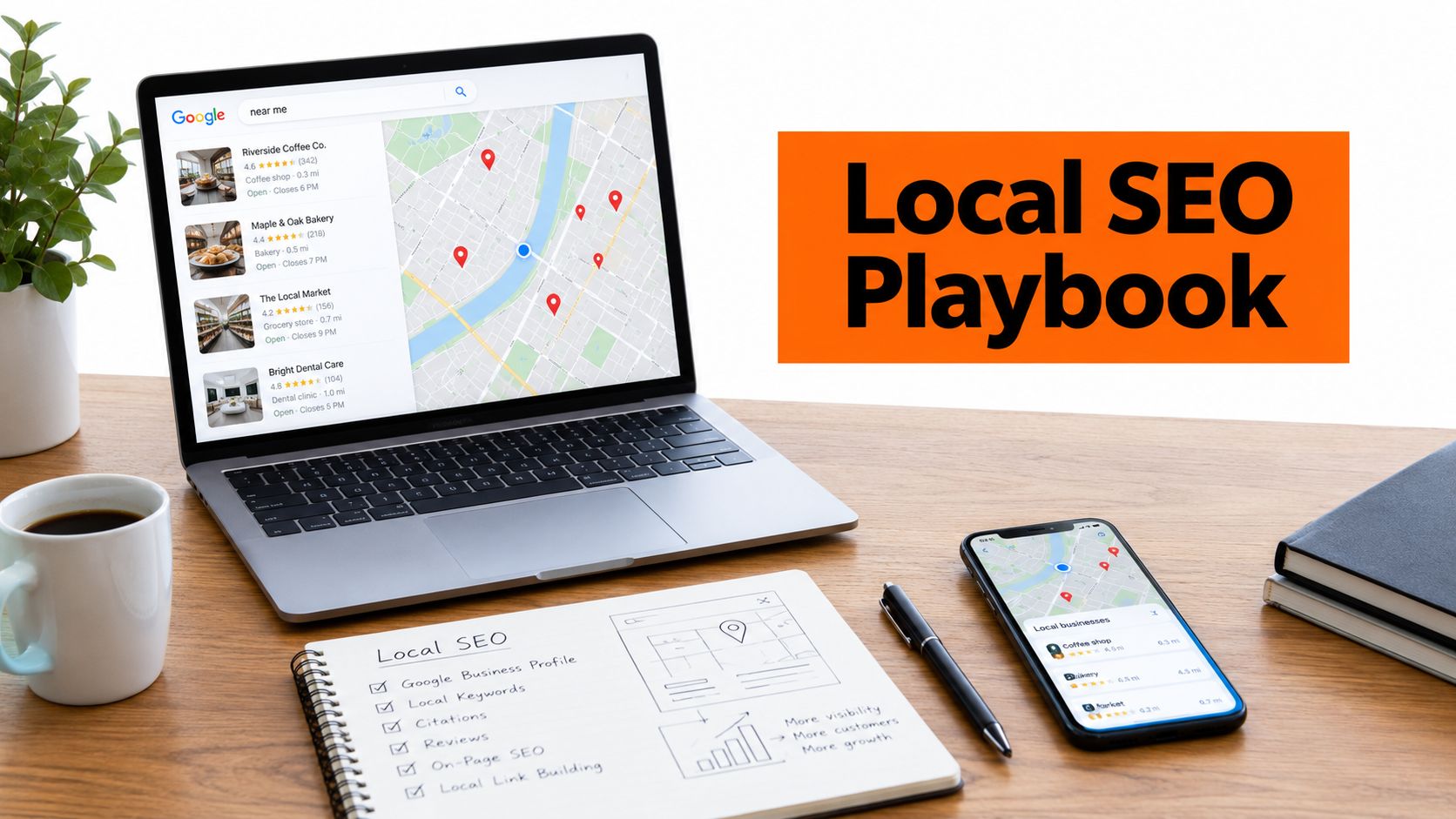
Your agency sold another local SEO retainer. The client expects stronger visibility, more calls, accurate listings, review growth, and a report that makes the monthly fee feel justified. Your account manager is already carrying too many campaigns, while the specialist who understands Google Business Profile categories, citation conflicts, service pages, and local reporting is buried in repetitive work.
That's the point at which white-label local SEO becomes more than an outsourcing shortcut. Done properly, it's a fulfillment system. Your agency owns the relationship, strategy, commercial packaging, and client communication, while a specialist team handles repeatable implementation under your brand. Done poorly, it creates opaque access, thin location pages, inconsistent data, and reports that promise rankings nobody can control.
The strongest model treats fulfillment, measurement, governance, and offboarding as one product. Clients should know what gets done, how performance is assessed, who controls their accounts, and what happens if the relationship ends.
Table of Contents
- Why Smart Agencies Productize Local Fulfillment
- What to Bundle in a Sellable Local SEO Package
- How to Fulfill Local SEO Without the Chaos
- How EmbedMyReviews Can Help
- Pricing Reporting and Workflows That Protect Margin
- Onboarding Access Control and Quality Checks Done Right
- Scaling With Reviews AI Search and Repeatable Growth
Why Smart Agencies Productize Local Fulfillment
A local retainer can look profitable until the work is itemized. One client needs a Google Business Profile audit. Another has duplicate listings. A third needs service and location pages. A fourth wants review responses, reporting, and new photos. None of these tasks is especially dramatic in isolation, but together they consume senior attention and create constant context switching.
White-label local SEO addresses that pressure by separating client ownership from fulfillment capacity. The reseller agency remains responsible for positioning, expectations, approvals, and commercial decisions. The specialist provider supplies the operational muscle, documented processes, quality checks, and reporting inputs.
That model grew more practical as local search expanded beyond website optimization. A campaign may now involve Google Business Profile management, directory listings, review workflows, citation consistency, local content, and conversion measurement. A provider that only edits website pages is solving one part of the visibility problem.
The economics behind the decision
Hiring internally gives you direct control, but it also means carrying recruitment, training, management, software, and unused capacity between sales cycles. Outsourcing reduces that fixed burden, although it introduces a different risk: you must manage quality, access, turnaround times, and communication through a defined operating model.
The 2021 Local Search Industry Survey covered 550 local marketers in the United States, Canada, and the United Kingdom and reported a median local marketer salary of $75,000. That figure doesn't tell an agency what to outsource, but it clarifies why repeatable fulfillment often makes more sense through a specialist partner than through an immediate full-time hire.
The same survey found that 43% of local marketing agencies and freelancers grew revenue during the COVID-19 pandemic, while 59% planned to freelance in the future. Those findings help explain the appeal of recurring local retainers. Agencies can preserve the client relationship and create dependable service revenue without building every delivery capability internally.
Practical rule: Outsource repeatable execution, not accountability. The agency should still own the brief, approval path, client narrative, and decision about what happens next.
What clients actually retain
Clients rarely stay because an agency says it completed a batch of citations. They stay when the work connects to outcomes they understand. The same BrightLocal survey identified local rankings, Google organic rankings, and phone calls as the business metrics clients valued most.
That changes how a white-label provider should work. A fulfillment partner shouldn't send a spreadsheet of completed tasks and expect the reseller to turn it into a story. It should provide evidence that supports a client-facing explanation:
- Visibility: How did fixed-location grids and query clusters change from the baseline?
- Engagement: Did calls, direction requests, profile actions, and website conversions move?
- Entity quality: Are the business name, address, phone, hours, categories, and services accurate?
- Next actions: Which unresolved issue has the greatest commercial importance?
A good partner makes the agency look organized because the work is organized. A weak partner makes the agency look like it has rented a dashboard.
When outsourcing is the wrong choice
Outsourcing isn't automatically cheaper or better. Keep work in-house when the account depends on deep brand knowledge, highly sensitive stakeholder relationships, or rapid strategic decisions that a provider can't make without constant supervision. Internal teams can also be preferable when local SEO is central to your differentiation and you have enough recurring demand to keep specialists productive.
White-label fulfillment works best when the work can be standardized without becoming mechanical. Define service boundaries, approval requirements, escalation rules, turnaround expectations, and evidence standards before assigning the first account. The goal isn't to hide the work. It's to make delivery dependable enough that your agency can sell with confidence.
What to Bundle in a Sellable Local SEO Package
A sellable package should mirror how local visibility works. Start with the business entity and its Google Business Profile, reconcile the information across important directories, improve the website's service and location relevance, create an ethical review process, and build locally relevant authority. Reporting then shows how those activities relate to visibility and business actions.
Directories deserve a place in the package because discovery doesn't happen only on the client's website. BrightLocal's 2024 Business Listings Visibility Study manually examined 800 Google searches and recorded 8,000 first-page organic results. Business directories appeared in 31% of all local-intent organic results and 37% of informational local-intent results. Yelp represented 28% of directory results, followed by Tripadvisor at 10% and Expertise at 8%.
That doesn't justify indiscriminate citation volume. It supports careful entity reconciliation, prioritization by market and industry, and ongoing maintenance.
The core deliverables
Google Business Profile management should cover verification status, primary and secondary categories, services, attributes, hours, photos, posts, description, service area, and change history. Never turn the business name into a keyword field. It must reflect the actual business name.
Citation and directory management starts with an authoritative record. Export the approved business name, address or service area, phone, URL, hours, and categories. Match that record against each important platform, document duplicates and suppressions, then recheck after major changes. Agencies that need a deeper operational reference can use this guide to citation management.
Service and location content should focus on priority services and genuine markets. Each indexable page needs a distinct purpose, useful local evidence, internal links, accurate contact information, and appropriate LocalBusiness or Service schema. A page created only to insert a suburb name is more likely to create maintenance debt than durable visibility.
Review operations need a compliant request process, response workflow, escalation path, and reporting view. Ask eligible customers for honest feedback without incentives, review gating, or scripted sentiment. A platform can help distribute requests, but it can't manufacture trust.
Local authority work should pursue geographically or contextually relevant opportunities, such as community organizations, industry associations, local publications, and legitimate partner relationships. Relevance matters more than a large undifferentiated backlink count.
Package tiers compared
| Deliverable | Starter | Growth | Multi-location |
|---|---|---|---|
| Baseline audit | One profile and core entity review | Profile, website, citations, and conversion baseline | Location-level baseline with shared governance |
| Google Business Profile | Core corrections and completeness work | Ongoing updates, posts, photos, and category review | Centralized standards with location-specific approvals |
| Citations | Priority directories and duplicate review | Reconciliation, monitoring, and niche sources | Location-by-location entity management and change logs |
| Website content | Priority service improvements | Service and genuine location pages with internal links | Scalable templates with local evidence and QA |
| Reviews | Request workflow and response guidance | Campaigns, response operations, and trend reporting | Role-based workflows, location dashboards, and escalation |
| Local links | Opportunity research | Outreach and relationship-led acquisition | Central pipeline with local-market ownership |
| Reporting | Monthly summary | Query clusters, actions, conversions, and recommendations | Multi-location dashboards, segmented reporting, and governance notes |
A starter package should be narrow enough to deliver well. A growth package adds ongoing work that improves the system rather than just increasing task volume. Multi-location pricing should account for governance, approvals, location-specific exceptions, and quality control, not just multiply every line item by the number of profiles.
The video below shows how a local SEO workflow can be made more visible to clients and internal teams.
Avoid promising a fixed ranking position. Package the work around measurable movement from a baseline, profile actions, calls, direction requests, website conversions, and share of visibility across agreed query clusters.
How to Fulfill Local SEO Without the Chaos
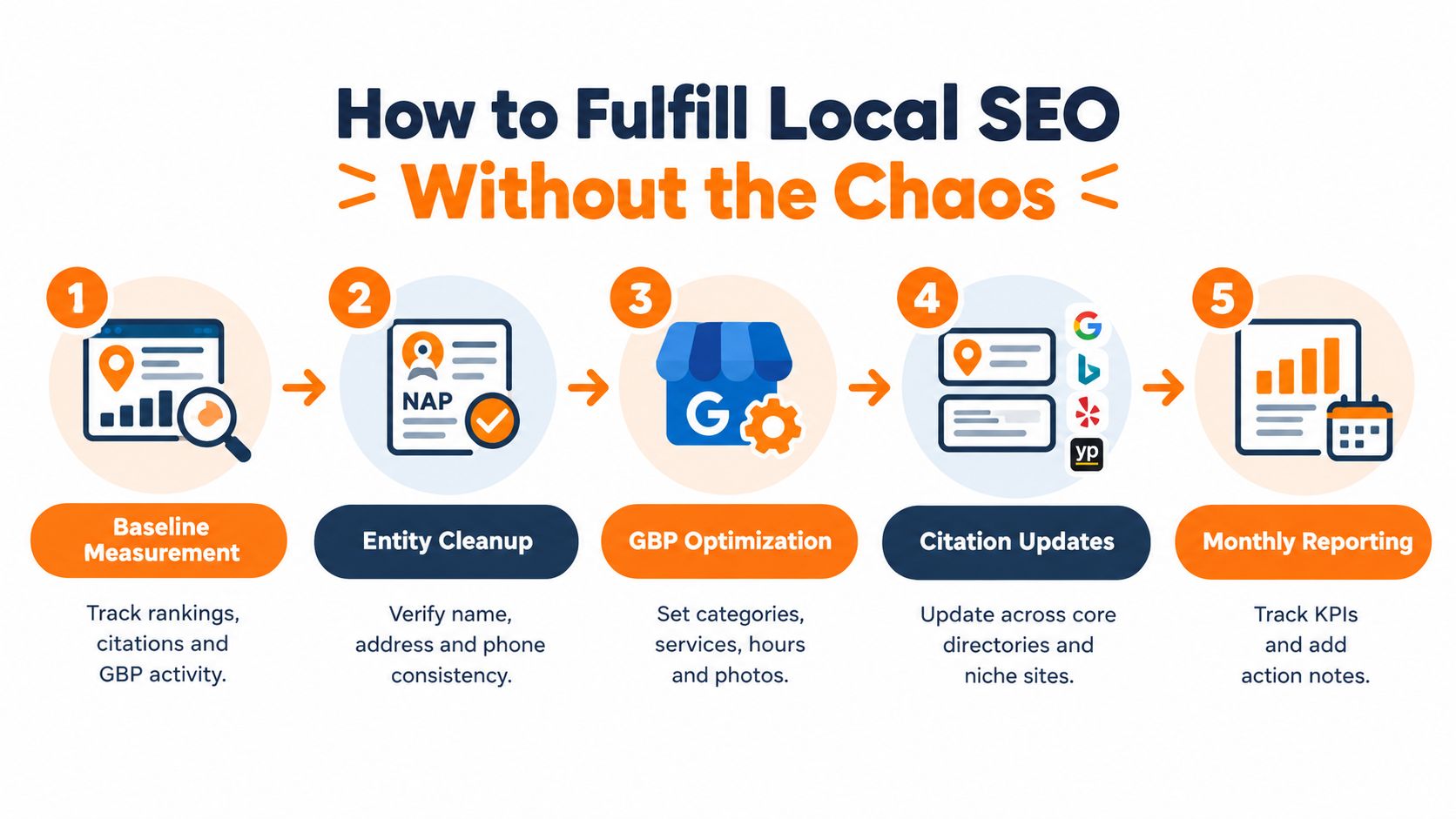
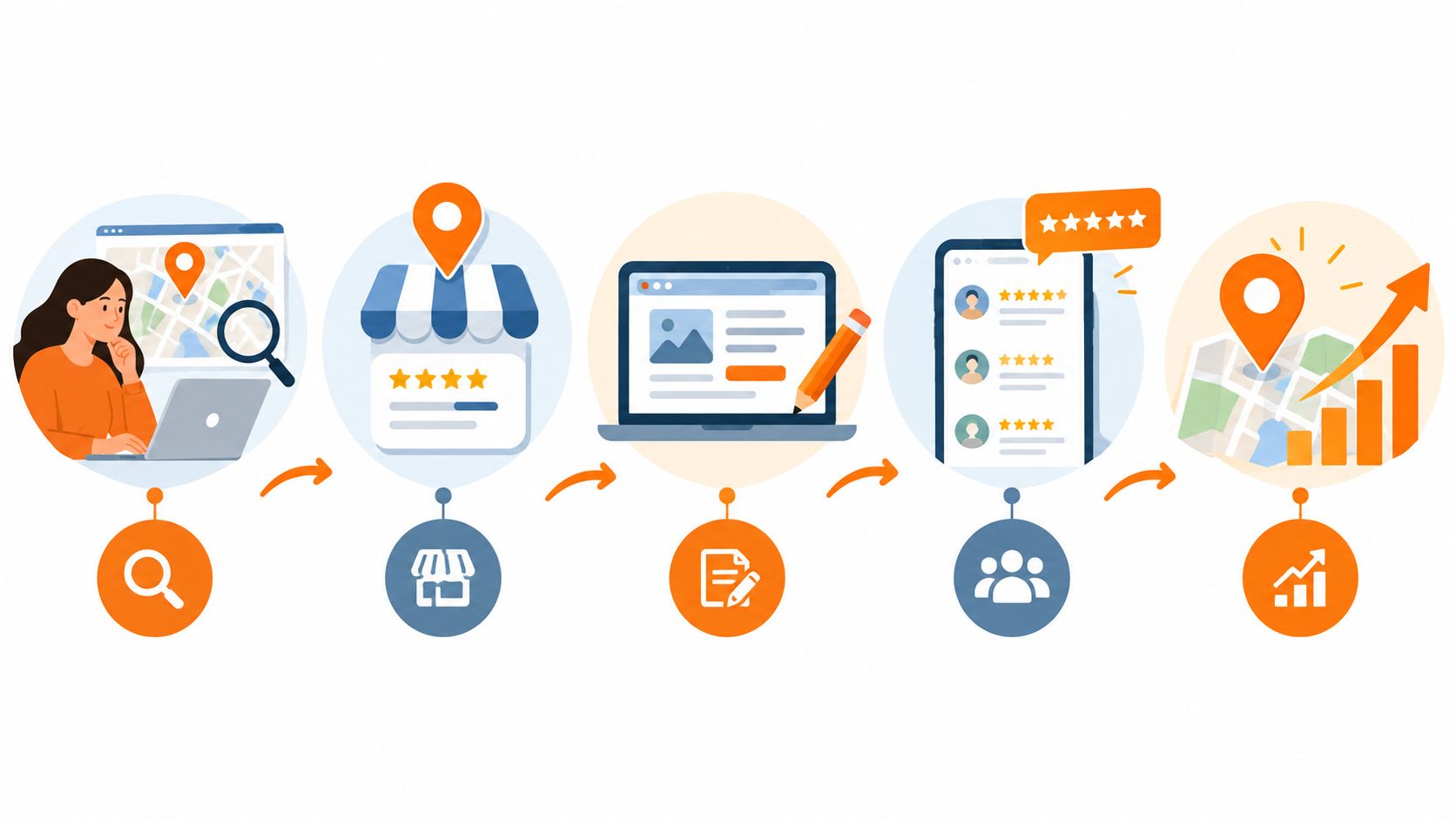
A client asks why calls have fallen, but the answer is rarely visible in one dashboard. A repeatable fulfillment workflow lets the team trace the problem through the business entity, profile configuration, website relevance, authority, reviews, or measurement. It protects quality by putting every account through the same controlled sequence, while still leaving room for location-specific decisions.
Start with a baseline, not a task list
Record grid-based rankings, branded and non-branded impressions, calls, direction requests, website conversions, review count and rating, and Google Business Profile completeness before making changes. Store the date, locations, query groups, and data source with each measurement.
A single average rank hides too much. Proximity and personalization can make one rank point misleading, while fixed-location grids and segmented query clusters show where visibility is changing. Keep implementation separate from measurement. The person making changes should not be the only person deciding whether those changes worked.
Verify the business entity
Create an approved entity record containing:
- Business identity: Legal or market-used name, approved URL, and primary phone.
- Location model: Storefront address, service area, or both where appropriate.
- Operating details: Hours, holiday hours, primary category, secondary categories, services, and attributes.
- Approval owner: The client contact who can confirm changes and resolve ambiguity.
Compare this record with the Google Business Profile, major directories, review platforms, social profiles, and website. A conflicting listing does not automatically justify creating another one. First determine whether the existing record can be corrected, merged, or suppressed.
Correct the profile and citations
Google says local results primarily use relevance, distance, and prominence, with prominence incorporating signals such as links and reviews. The Google guidance on local ranking should shape the operating sequence, rather than sit unused in a sales deck.
The 2023 Whitespark local search ranking factors survey ranked the primary Google Business Profile category, proximity, address-city alignment, rating, and additional categories among the strongest Local Pack factors. For organic visibility, it highlighted dedicated service pages, internal linking, locally relevant inbound links, and geographic relevance.
Correct the profile first, then update the highest-value citation sources. Record every change, who approved it, when it was made, and whether a follow-up check is required. This change log turns governance into a repeatable service component and gives the agency an audit trail when ownership or access changes.
Build useful pages and credible signals
Create one indexable page for each priority service and genuine location combination. Give every page a distinct title, clear heading structure, internal links, locally relevant evidence, and accurate schema. Avoid building pages for every nearby suburb because a keyword tool lists it. Doorway pages and duplicated location copy add risk without helping customers.
Prepare content so it can be understood beyond traditional search results. Clear service descriptions, consistent business facts, direct answers, and accessible page structure improve readiness for AI-assisted discovery without requiring unsupported claims. Review the final copy against the approved entity record before publication.
Send review requests consistently to eligible customers without manipulating the outcome. Link opportunities should be locally or contextually relevant. A local organization connected to the client is a stronger prospect than a generic placement created only to increase a report count.
Report against the baseline
Each month, show what changed, what it means, and what happens next. A useful report might include:
- Visibility: Grid movement and share of visibility by service and query cluster.
- Profile activity: Calls, direction requests, website actions, profile completeness, and approved updates.
- Reputation: Review volume, rating, recency, response coverage, and recurring topics.
- Website performance: Organic conversions, service-page engagement, and location-page contribution.
- Open risks: Pending approvals, unresolved duplicates, inaccurate hours, or policy concerns.
Use a local SEO platform that supports consistent tracking, segmented views, and branded reporting, as described in this local SEO platform guide. The report should help the client choose the next action, not interpret disconnected charts. Keep access roles, approvals, and export rights documented so the account can be handed over or closed without operational confusion.
How EmbedMyReviews Can Help
EmbedMyReviews is a white-label reputation management platform for agencies, consultants, franchises, and local operators. It brings review collection, response workflows, Google Business Profile posts, local rank tracking, analytics, widgets, and sales intelligence into an agency-branded environment.
That combination is useful when your current stack separates every operational step. Review requests live in one tool, profile posts in another, geo-grid tracking somewhere else, and reporting requires manual assembly. EmbedMyReviews provides custom-domain deployment, branded billing, role-based permissions, scheduled reports, multi-location dashboards, and client approval workflows.
Where the platform fits
Its review layer supports collection across 67+ sources, BYOK email, SMS, and WhatsApp campaigns, feedback routing, QR and NFC tracking, and first-party testimonials. AI-assisted responses can use agency-provided keys, global prompts, tone matching, and human approval. That last control matters. Automated drafts should accelerate review handling, not publish unverified claims.
The Google Business Profile workflow supports posts, client email approvals without login sharing, update, offer, and event formats, media handling, and location geotags. The Local Search Grid provides geo-distributed tracking, recurring scans, multi-keyword schedules, and white-label PDF exports. Sales Intelligence adds AI-powered audit reports, Trust Score, competitor benchmarks, and AI visibility testing in major large language models.
The platform uses a flat $99 per month model covering unlimited clients, locations, and users in the base platform, without per-location or seat-based pricing. That can be attractive for agencies whose margins are squeezed by account or seat fees, but you should still model messaging, AI, implementation, and account-management costs separately.
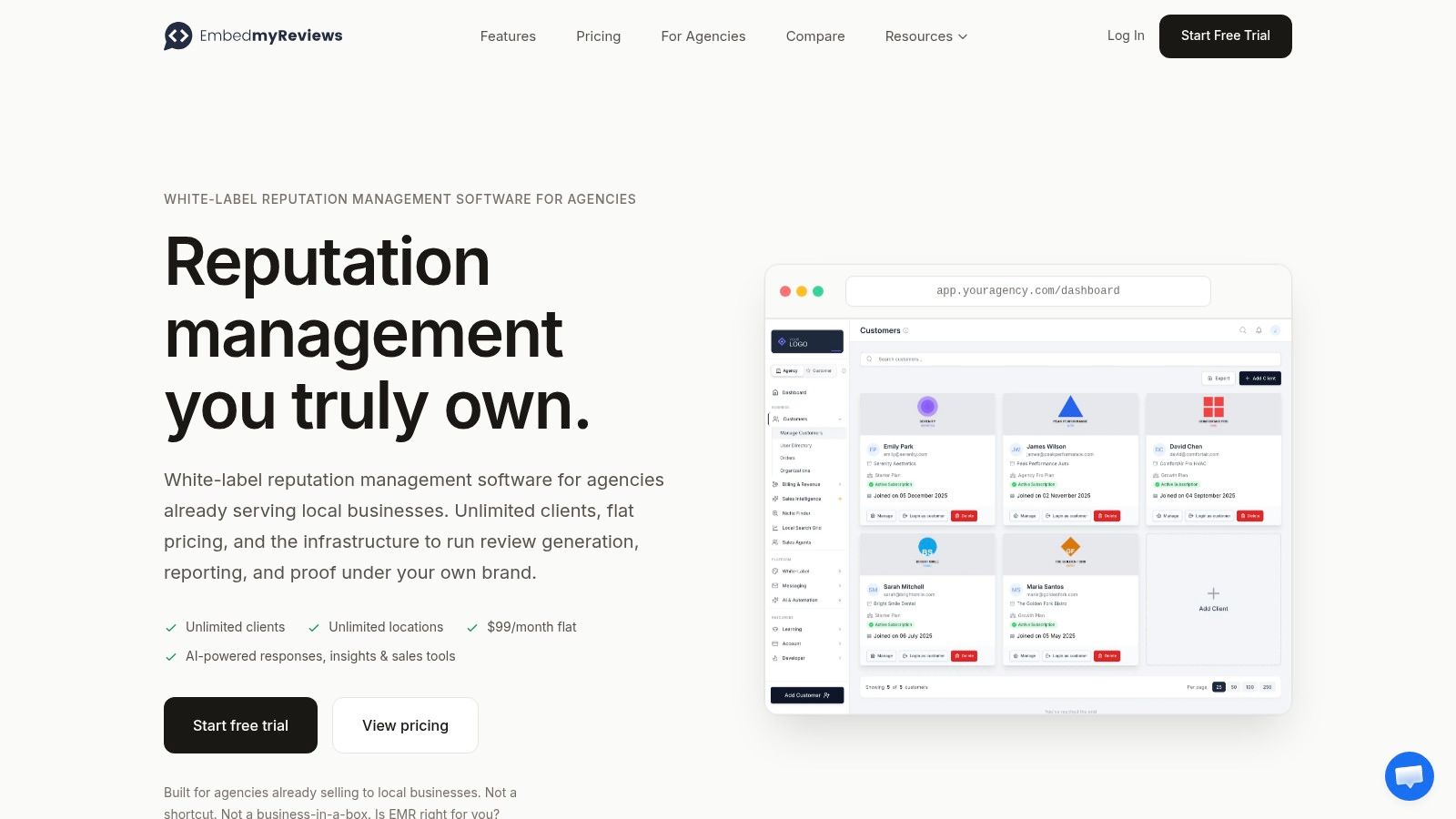
The right choice depends on your bottleneck. Choose a specialized reputation tool if review collection is the main problem. Choose a rank tracker if measurement is the priority. Choose an integrated agency platform such as white label local SEO when you need one branded operating layer for reviews, profiles, tracking, reporting, permissions, and sales enablement.
Pricing Reporting and Workflows That Protect Margin
A white-label package becomes profitable when the boundaries are clear before delivery begins. The dangerous version starts with a broad promise such as “full local SEO,” then absorbs every request involving websites, social content, listings, reviews, photography, and reputation.
Use a pricing model that matches how work is consumed. Three approaches are practical:
| Model | Best fit | Margin risk | Control needed |
|---|---|---|---|
| Fixed package | Similar businesses with repeatable needs | Exceptions can consume the fee | Strict deliverable limits |
| Base fee plus add-ons | Agencies serving varied markets | Clients may find the menu confusing | Clear approval and change rules |
| Custom scope | Complex or multi-location accounts | Estimation can become slow | Detailed discovery and review |
A fixed package is easiest to sell and fulfill. A base fee with add-ons protects margin when clients need additional locations, pages, review workflows, or bespoke reporting. Custom scopes make sense when the entity structure, market, or approval chain creates unusual work, but they demand disciplined estimation.
Build the intake around decisions
The intake form should collect facts that affect delivery, not just general brand information. Ask for the approved business name, address or service area, phone, website, hours, categories, locations, service priorities, access contacts, conversion actions, competitors, and reporting recipients.
Then define what requires approval. Profile changes, business information, review responses, new pages, schema, posts, and outreach targets shouldn't all follow the same path. Assign an owner, a deadline, and an escalation route for each category.
Margin protection comes from controlling decisions, not from working faster.
Use a fulfillment queue
Separate work into four queues:
- Onboarding: Access, entity verification, baseline capture, and risk review.
- Production: Profile updates, citation corrections, content, reviews, and links.
- Quality assurance: Accuracy, policy checks, formatting, tracking, and approval status.
- Reporting: Completed work, performance movement, unresolved issues, and next actions.
This structure prevents a report writer from discovering that a critical profile change never went live. It also gives the agency a clean way to explain delays. “Waiting for approved holiday hours” is more useful than “the campaign is in progress.”
Make the report a retention asset
A monthly report should answer three questions. What changed? What business action did it support? What will the team do next?
Use calls, direction requests, website conversions, profile actions, review trends, and share of visibility by query cluster where available. Show the baseline and the current period, but don't imply that every movement came from one task. Local results reflect relevance, distance, prominence, competition, seasonality, and searcher location.
Scope changes belong in the report or account log. If a client asks for a new market, a new service cluster, or a new website section, record it as a decision with an owner and commercial impact. That habit keeps the retainer honest and helps the client see why additional work costs more.
Onboarding Access Control and Quality Checks Done Right
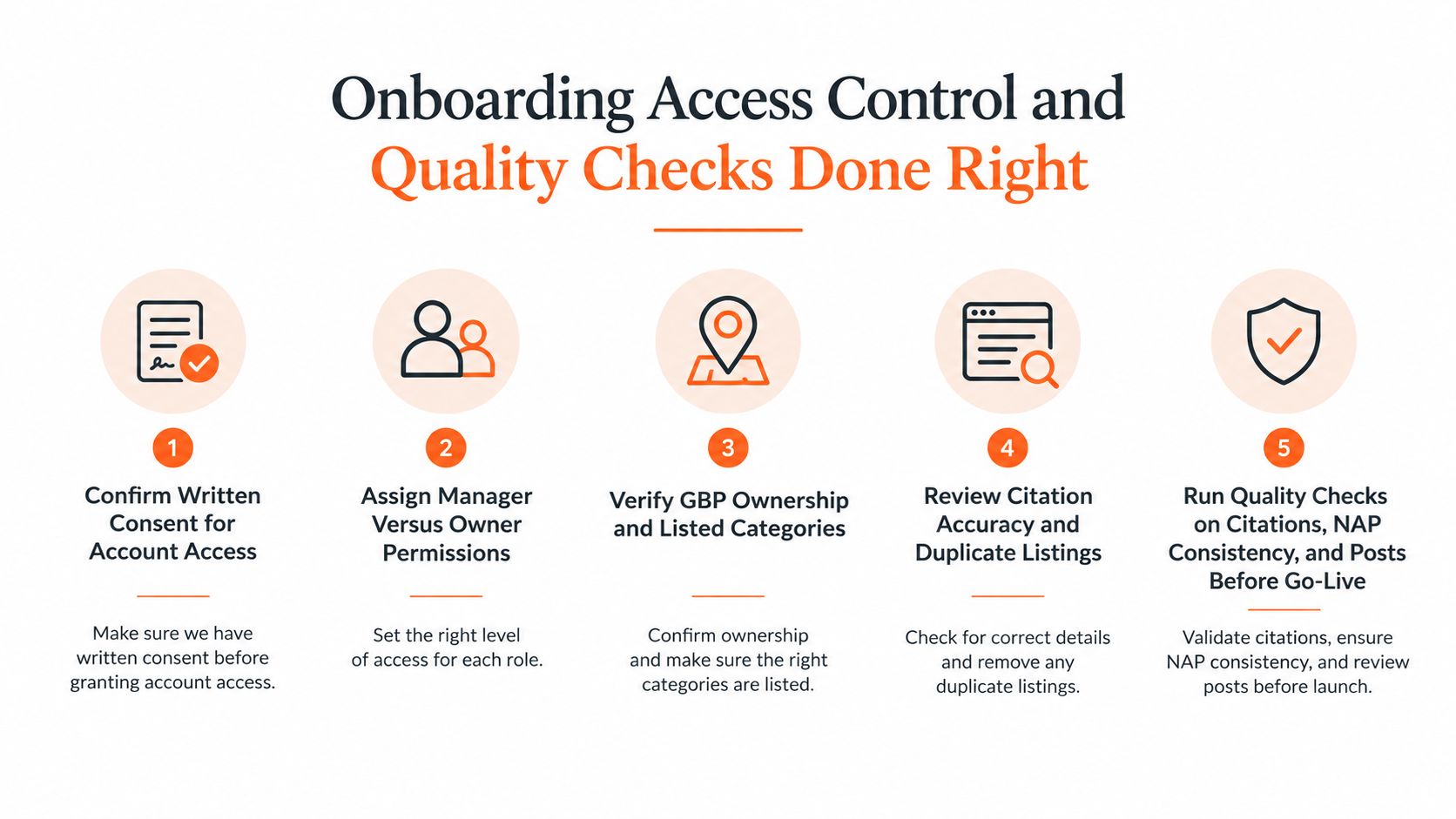
Access control is part of the service promise. If your agency can improve a Google Business Profile but can't explain who owns it, who can remove access, and how the client gets it back, the account isn't operationally safe.
Google classifies third-party SEO companies as authorized representatives and says they may manage profiles only with authorization. The Google guidance for third-party profile management also explains that clients can add managers instead of sharing credentials and should retain direct access.
Make governance visible
Create an access matrix before work begins:
- Business owner: Retains primary control and recovery responsibility.
- Agency: Manages the client relationship, approvals, reporting, and agreed operational access.
- Fulfillment provider: Receives only the permissions needed to perform assigned work.
- Client approver: Confirms business facts, content, posts, and review-response exceptions.
Managers can usually handle routine work without receiving the client's password. Avoid making an outsourced provider the primary owner unless there is a documented, client-approved reason and a clear transfer plan.
Run quality checks before go-live
Before publishing or submitting changes, check:
- Identity: The business name matches the approved real-world name.
- Location: Address, service area, phone, hours, and URL are accurate.
- Categories: Primary and secondary categories reflect actual services.
- Citations: Important records match the authoritative entity file.
- Content: Pages, posts, photos, and review responses contain no unsupported claims.
- Measurement: Tracking locations, query groups, calls, and conversions are configured.
- Audit trail: The change, approver, date, and follow-up status are recorded.
These checks protect more than rankings. They reduce the chance that a wrong phone number sends customers to the wrong team, that incorrect hours create a poor experience, or that a keyword-stuffed name creates a policy problem.
More access isn't better service. The safest setup gives each party enough permission to do its job while the business keeps control.
Design the exit before the start
An exit-ready SOP should cover ownership transfer, manager removal, account recovery, token revocation, listing access, review responses, photos, posts, reports, exports, and outstanding work. Confirm who owns the content and reporting history, then store the decision where the agency and provider can retrieve it.
Review permissions regularly, especially after staff changes or contractor turnover. A quarterly access review is a sensible governance habit for multi-location accounts, even if no visible problem has appeared. Clients trust agencies that can explain continuity without using lock-in as a retention strategy.
Scaling With Reviews AI Search and Repeatable Growth
Local SEO now has to support more than a map result. Customers may inspect a profile, read reviews, compare service pages, ask an AI assistant for recommendations, or verify hours before they contact a business. The agency's job is to make the underlying facts consistent and useful across those moments.
Recent consumer research found that 40% of consumers actively use generative AI in search, 67% often or always inspect reviews after a local search, and 85% consider accurate contact information and opening hours important when researching a local business, according to BrightLocal's consumer search behavior research.

Build an evidence loop
Reviews are not just a rating input. They contain customer language about services, problems solved, locations, staff, speed, accessibility, and experience. That language can help an agency identify which claims deserve clearer treatment on service pages, in profile descriptions, and in approved social content.
The process should remain ethical:
- Ask broadly: Invite eligible customers to leave honest feedback.
- Avoid manipulation: Don't offer incentives, gate unhappy customers, or script sentiment.
- Read for themes: Identify recurring questions, service terms, and experience gaps.
- Improve the source: Update accurate first-party content and profile details.
- Measure separately: Report review activity, traditional visibility, and AI answer visibility as different outcomes.
AI discovery isn't just another ranking position. A system may summarize a business incorrectly if its hours conflict across profiles, its services are vague, or its customer evidence doesn't support its positioning. Monitor the answers themselves for factual errors. Record the prompt, platform, business representation, and correction needed, but don't claim that one test represents every searcher.
Turn verified facts into useful content
A local content workflow should begin with approved facts, not generic prompts. Build a source file containing services, areas served, qualifications, hours, accessibility information, policies, customer questions, and approved examples. Mark sensitive or changeable information so someone reviews it before publication.
That source file can support:
- Service-page improvements.
- Profile posts and updates.
- Review-response guidance.
- Frequently asked questions.
- Sales audit findings.
- Platform-specific social content.
A social publishing system can extend the reach of those verified stories, but it shouldn't replace the local SEO foundation. Agencies managing many accounts may use scaling workflows for agencies to standardize approvals, content queues, and reporting without allowing automation to invent client facts.
Scale through standards, not shortcuts
Multi-location growth needs a shared operating standard with room for legitimate differences. Keep the business identity, naming policy, category rules, review policy, schema requirements, approval roles, and reporting definitions consistent. Allow each location to contribute genuine local evidence, services, hours, photos, and customer themes.
The strongest agencies eventually sell governance as part of fulfillment. They know what access exists, how information is verified, how AI-facing claims are monitored, how reviews feed customer insight, and how every account can be handed back cleanly. That discipline makes white-label local SEO easier to scale because the team isn't relying on memory or heroic effort.
If your agency is ready to turn local delivery into a repeatable, branded service, start by documenting one complete account from baseline through offboarding. Then standardize the parts that worked, remove the steps that created rework, and build your next package around accurate facts, measurable actions, controlled access, and honest reporting. For the social content layer, explore how Quuu can help your team turn approved local insights into consistent branded publishing workflows.